Renovating a Dubai villa to sell: where the budget should go
Key points
- Before a sale, fix what a buyer's surveyor will find and present the house well. Taste is a different matter: a new kitchen in your style may be the first thing the buyer rips out.
- Unapproved works can hold up a sale. Before you list, check that every extension, pool and layout change you made has the developer's and the authority's approval.
- Market reports show fully renovated villas in established communities such as Jumeirah Islands selling at prices above some trophy areas. That is a whole-house story about location and quality, not a promise that any renovation pays for itself.
- Decide with your agent and a costed scope, not on hope. Ask a broker what comparable renovated and unrenovated villas in your community actually sold for, then price the work against that gap.
Renovating a villa before you sell it in Dubai is worth doing when the work fixes what a buyer would otherwise discount, or when your community is one where buyers clearly pay more for a finished house. It is rarely worth doing to impose your own taste on the next owner. The money is best spent in this order: what a buyer's survey will find, then the paperwork, then presentation, and only then a larger renovation if the evidence supports it.
This guide is for owners deciding what to do before they list. It is written from the builder's side: our founder, Philip Chapman, ran a residential construction company in England for 21 years, and a good part of that work was for people who had just bought a house and were changing what the last owner had done.
What do buyers actually pay for?
Writing in The National in August 2026, Mario Volpi of Eva Real Estate put first impressions first. He listed fresh paint, a well-kept garden, good lighting and finishing the small jobs that have been put off, and said buyers quickly notice whether a home feels cared for. He also warned that owners can spend hundreds of thousands of dirhams on a renovation, only for the buyer to replace it because they wanted a different style.
That matches what we saw from the other side. A buyer pays for a house that works and feels looked after. They discount heavily for anything that suggests hidden problems, and they rarely pay full price for someone else's taste.
| Spend before you sell | Usually worth it | Usually not worth it |
|---|---|---|
| Leaks, damp, cracked tiles, failing grout | Yes: a survey will find them and the buyer will discount more than the repair costs | |
| Air conditioning servicing and repairs | Yes: AC is the first system a Dubai buyer asks about | Replacing a working system just to say it is new, unless your broker says buyers expect it |
| Pool equipment, pumps and leaks | Yes | Re-shaping or re-finishing a sound pool |
| Paint, lighting, garden, small repairs | Yes: low cost, high effect on first impressions | |
| Approvals for past works | Yes: they can hold up the sale itself | |
| New kitchen or bathrooms in your own style | Often not: the buyer may replace them | |
| Extension or layout changes | Rarely, unless approved, finished well before listing and backed by local sales evidence |

Fix what the buyer's survey will find
A careful buyer of an older villa may commission a survey before signing. Our guide to surveying an older villa before you buy sets out what a good surveyor looks at: the air conditioning, roofs and terraces, wet areas, drainage, electrics and the pool. A seller can use the same list.
From the builder's side, small defects matter more than their cost suggests. A buyer who finds three small leaks starts wondering what else is wrong, and the price conversation changes. Fixing them before listing usually costs far less than the discount they invite.
- Commission your own pre-sale inspection, or walk the house with a contractor you trust.
- Fix what is failing, with receipts and photographs.
- Gather the maintenance history: AC servicing, pest control, any leak or drainage repairs.
- Keep it honest: disclose what you have not fixed. A buyer who finds an undisclosed problem late may walk away or renegotiate hard.
Check the paperwork before you list
Unapproved works can hold up a sale. In one case fäm Properties described, a villa's pool had been built with approvals in 2009, but under rules Dubai Municipality introduced in 2014 it needed updated approvals before the developer would issue the NOC for sale or transfer. Collecting them took about four weeks.
Before you list, check that you have the master developer's approval and, where needed, the authority's permit and completion paperwork for every:
- extension or added room;
- pool, pergola or shade structure;
- layout change that moved walls, wet areas or services;
- change to the façade.
Our guide to changing a villa's layout explains which changes need approval. If something was built without the right approvals, take advice from a UAE-qualified lawyer and your developer before you list. Sorting it out early is usually quicker than sorting it out while a buyer waits.
When a bigger renovation can make sense
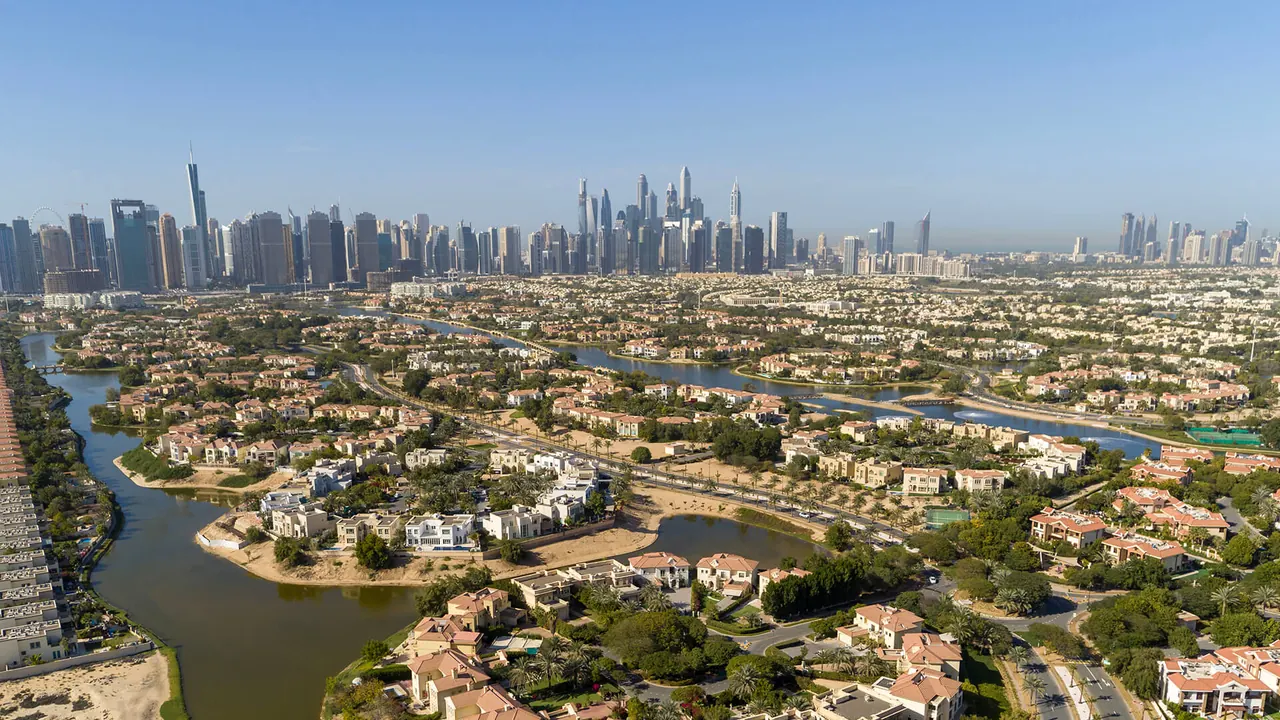
There are communities where a fully renovated villa sells for clearly more than an original one. Khaleej Times reported in August 2025, citing Savills' prime residential research, that renovated villas in established communities were reaching record prices. Its example was Jumeirah Islands: completed in 2006, it recorded eight sales above AED 10 million in 2021 and 89 in 2024, with the highest rate reported at AED 6,375 per square foot, above comparable Emirates Hills averages.
That is real, but read it carefully. It describes whole-house renovations of good villas in a mature, well-located community with limited supply. It does not say that a renovation pays for itself, or that the same would happen in your community. Some of those owners renovated to live in the house for years, not to sell it.
A larger renovation before a sale can make sense when:
- your broker can show recent sales of comparable renovated and unrenovated villas in your community, and the gap is large;
- the villa is sound and the work is mostly finishes, kitchens, bathrooms and landscaping, not structure and services;
- you can finish well before you list, with approvals in hand;
- you can carry the holding costs and the time.
It rarely makes sense when the house needs services and structure replaced. That work is expensive, invisible to most buyers, and slow. In that case, it may be better to price the house honestly as a renovation opportunity and let the buyer choose their own design. Our renovate-or-rebuild tool and our guide to whether a villa needs a refresh, a refit or a full renovation help separate those cases.
How to set the budget
Do not start with a number you hope to recover. Start with evidence on both sides.
- Ask a broker for the gap. What have comparable villas in your community, renovated and unrenovated, actually sold for recently? Ask for sale prices, not asking prices.
- Get a costed scope. Price the work line by line, with a contingency set for the age of the house and a realistic programme. Our villa renovation cost guide and cost calculator give a first range.
- Add the holding costs. Service charges, utilities, finance and rent elsewhere while the work runs, plus the months of delay before you can list.
- Compare. If the evidence shows a gap that clearly covers the cost, the time and the risk, the renovation may be worth doing. If it is marginal, spend on repairs and presentation instead.
We make no promise about returns, and you should be wary of anyone who does. Property prices move, and every house and community is different.
Common mistakes
- Renovating to your own taste. Neutral, well-made finishes sell. Strong personal choices often do not.
- Starting too late. A renovation that runs into your listing date forces a sale with tradespeople still in the house.
- Leaving approvals until the buyer asks. The paperwork can take weeks.
- Hiding defects behind new finishes. A new floor over an old leak will be found, and the buyer will trust nothing else you say.
- Cutting the contingency. Older villas hide surprises; our article on older villa services explains where.
How Eastbridge can help
We sit on the owner's side. Before a sale, that can mean walking the house with you to list what a buyer's surveyor would find, helping you decide what to fix and what to disclose, pricing a pre-sale scope against the evidence your broker provides, and making sure approvals for past works are in order. If a larger renovation makes sense, we help you scope it, compare contractor bids like for like and keep it on programme so you can list on time. You appoint the consultant and contractor; we represent you alongside them. See our villa renovation project management service, or contact us to talk through your house.
General information, not legal or financial advice. Take advice from a UAE-qualified lawyer on approvals and disclosure, and from a licensed broker on pricing.

Questions
Does renovating a villa before selling increase its value in Dubai?
What should I fix before selling my villa in Dubai?
Can unapproved changes stop me selling my villa?
Should I renovate fully or sell as it is?
Sources
- The National: Will renovating my Dubai home before selling actually increase its value? (14 August 2026)
- Khaleej Times: Dubai luxury off-plan sales surge 240% in two years, citing Savills (4 August 2025)
- fäm Properties: International seller without correct building permit (April 2020)
This article is general information, not advice for your specific project. Figures are from the sources cited and change over time.