Renovating a villa in an Emaar community
Key points
- In Emaar communities, Emaar Community Management says any alteration to a villa has to be approved by Emaar; you apply for a home modification NOC through the community portal.
- Interior painting and regular maintenance do not need a NOC, according to Emaar Community Management's guidance for Arabian Ranches.
- Changes that alter how the villa looks from outside are restricted, so check the community's guidelines before the design starts.
- Contractors need a digital permit to enter the community; a home modification permit needs the reference number from Emaar's approval email.
- The developer's approval comes first. Your DM-registered consultant then confirms whether the work also needs an authority permit.
In an Emaar community, the developer's approval comes before anything else. Emaar Community Management says any alteration to a villa has to be approved by Emaar, through a home modification NOC requested on the community portal. Contractors then need a digital permit to get through the gate, and your consultant confirms whether the work also needs an authority permit. Getting the order right is what keeps a renovation from stalling in its first month.
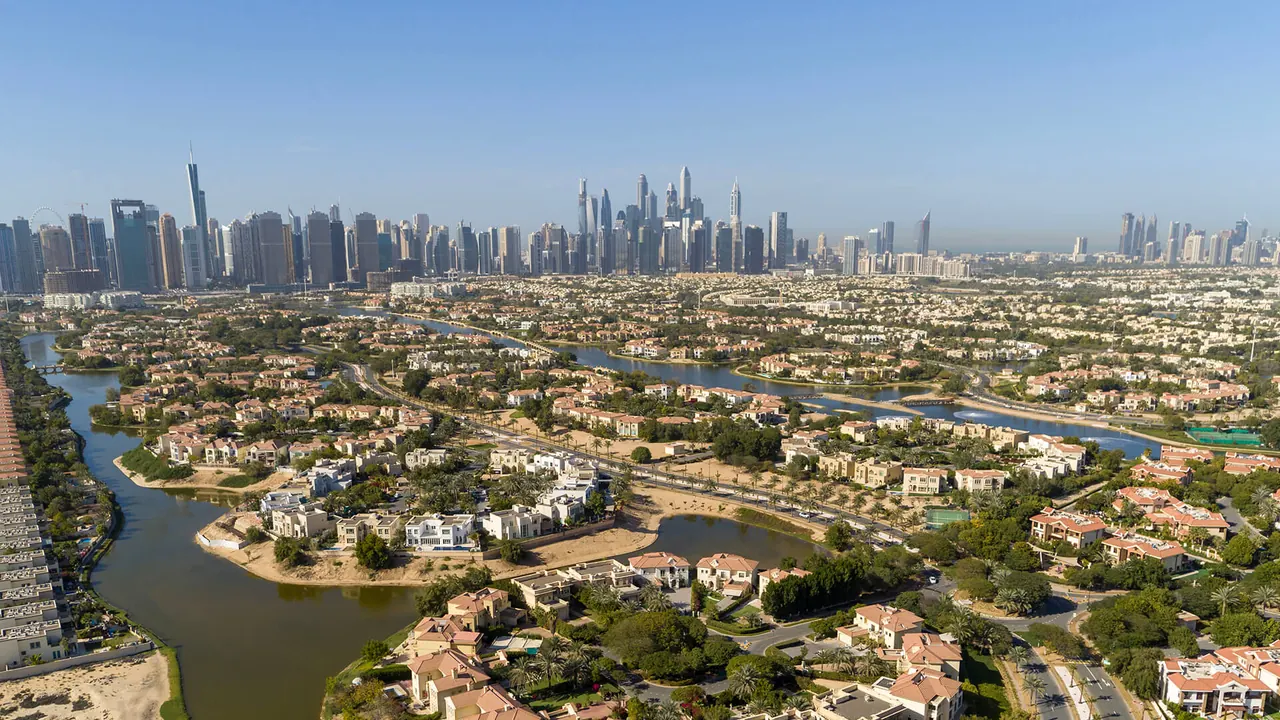
This guide covers Emaar's villa communities such as Arabian Ranches, Dubai Hills Estate and Emirates Living (The Springs, The Meadows and The Lakes). Each community has its own guidelines, so treat this as the route, not the rulebook. For the broader process, start with how to plan a villa renovation in Dubai.
What needs Emaar's approval
Emaar Community Management's guidance for Arabian Ranches and Emirates Living is short and clear: any alteration to the villa has to be approved by Emaar. In practice that covers most renovation work beyond redecorating, such as kitchen and bathroom remodels, structural or layout changes, extensions, pergolas, pools, fences and gates, and anything that changes the outside. If you are adding space, see our villa extension guide.
Some work does not need a NOC. The Arabian Ranches guidance says interior painting and regular maintenance can go ahead without one. The contractor still needs a permit to enter the community (see below).
The tighter rules are on the outside. The Emirates Living guidance says external changes to the villa are not permitted. The Arabian Ranches guidance restricts changes that alter the villa's look and points owners to the home modification guidelines for items such as balconies. Both say lights cannot be fitted on top of boundary walls or on their community-facing side. If your plans touch the façade, the roof line or the boundary, ask Emaar Community Management early, before the architect commits to a design.
Our guide to changing a villa's exterior compares what the main developers allow.

The approval sequence
The order matters more than any single step. This is the sequence we plan around.
| Step | What happens | Who usually does it | What it produces |
|---|---|---|---|
| 1. Check the guidelines | Read the community's home modification guidelines and confirm what is allowed | Owner and consultant | A brief that fits the rules |
| 2. Design | Drawings and a description of the works | Owner's DM-registered consultant | A submission package |
| 3. Home modification NOC | Request via the community portal (Home Modifications) | Owner, with the consultant's package | Emaar's approval email with a reference number |
| 4. Authority permit, if needed | Building permit for works that require one | DM-registered consultant | Permit, or written confirmation that none is needed |
| 5. Contractor's permit | Home modification permit on ecmpermits.ae using the NOC reference | Contractor | Digital permit with QR code for the gate |
| 6. Works | Construction within permitted hours and community rules | Contractor | Completed works |
| 7. Close-out | Any inspection or completion steps Emaar or the authority require, then handover | Consultant and contractor | Records for the owner's file |
Two points catch owners out. First, the NOC and the authority permit are separate. A NOC confirms the developer has no objection; it is not a building permit. The Law Reporters' summary of Dubai's rules notes that Local Order No. 3 of 1999 requires prior approval for permanent or temporary modifications, and that changes to approved plans need approval too. Your consultant confirms which authority applies and whether a permit is needed, and our guide to which Dubai authority covers your villa explains why that depends on where the plot sits.
Second, the contractor cannot simply turn up. Since 1 July 2021, Emaar Community Management has only let contractors in with a digital permit, scanned at the gate. A permit for home modification works needs the reference number from Emaar's approval email, so the NOC has to exist before the contractor's permit can be issued.
Contractor access in practice
ECM's contractor permit fact sheet describes three permit types, and it is worth knowing which one your work needs.
| Permit type | Typical use | Notes from the fact sheet |
|---|---|---|
| Short-term | Small jobs finished in a day or two: AC servicing, small repairs, plumbing, cabling | Valid for two days only |
| Home modification | Works with a home modification approval, such as kitchen remodelling, villa painting, pergolas, planter boxes, side gates and fences | Needs the unique reference number from Emaar's approval email |
| Long-term | Regular maintenance under a longer contract, such as gardening or annual AC and pest-control contracts | The resident approves the request on the community portal |
The contractor must first register the company on ecmpermits.ae (trade licence, manager's passport and Emirates ID), then register each worker and vehicle. Staff must be on the company's visa. ECM says approvals take about one business day once that is done. In our experience, the delay is rarely the permit itself. It is a subcontractor whose staff were never registered, discovered on the morning they arrive at the gate.
Make it a contract condition that the main contractor gets permits for every trade, including specialists brought in later, and that nobody works outside permitted hours. Our article on villa construction contracts in the UAE covers the clauses to include.
How long it takes and what it costs
Emaar Community Management's community pages do not publish fixed timelines or fees for home modification approvals, so we do not quote them. Ask for current figures when you apply, and build the approval period into the programme as its own phase rather than assuming it runs alongside design.
What we can say from experience is where time goes:
- Incomplete submissions. A package that leaves out details of external items or of structural changes comes back with questions. Send it complete the first time.
- Design that ignores the guidelines. Reworking drawings after a refusal costs more time than checking the rules at the start.
- Running the authority permit late. If the work needs a permit, the consultant should prepare for it while the NOC is being processed.
- Long-lead materials. Kitchens, glazing and air-conditioning plant can take longer than the approvals. Order dates belong on the programme from the start.
Our villa renovation timeline shows how approvals, procurement and site work fit together, and villa renovation costs in Dubai sets out the published cost ranges.

Emaar compared with other master developers
The principle is the same across Dubai's master-planned communities: the developer's approval first, the authority permit if needed, then controlled contractor access. The details differ: the portal, the guidelines, the permit system and how strict the community is about exteriors. If you own in a Nakheel community, our guide to the Nakheel NOC for villa renovations covers that route.
If you are buying to renovate
If you are buying an Emaar villa with plans to change it, check before you commit. Ask the seller for any earlier home modification approvals, compare the house with what was approved, and read the community's guidelines against your plans. Work done without approval by a previous owner can become your problem when you apply for your own NOC. A short pre-purchase review by your consultant, with a realistic budget range from us, costs little next to the price of the villa.
Older Emaar villas
Arabian Ranches and Emirates Living include some of Dubai's older villa communities. Renovating an older house often means replacing services that the approval process does not show you, such as wiring, water pipes, drains and air conditioning. Survey and open up before you design, so the submission reflects what the house actually needs. Our guide to rewiring and replumbing an older Dubai villa sets out what to check.
For internal changes specifically, see our guide to changing a villa's layout.
What we do and what we don't
We represent the owner. Your DM-registered consultant prepares the drawings, makes the submissions and confirms the authority route; your contractor carries out the work and obtains its own access permits. Our part is keeping all of that in the right order: a brief that fits the community's guidelines, a programme that treats approvals as a phase of their own, bids compared like-for-like, and independent client-side site visits and reporting through to handover. See our renovation project management service, or contact us to talk through your villa.

Questions
Do I need Emaar's approval to renovate my villa?
How do I apply for a home modification NOC in an Emaar community?
Can my contractor start work once Emaar approves?
Can I change the outside of my villa in an Emaar community?
Does an Emaar NOC replace a building permit?
Sources
- Emaar Community Management: Home modifications, Arabian Ranches (FAQ)
- Emaar Community Management: Home modifications, Emirates Living (FAQ)
- ECM Permits: Contractor's permit fact sheet
- The Law Reporters: Dubai's renovation regulations, procedures for property modifications (July 2024)
This article is general information, not advice for your specific project. Figures are from the sources cited and change over time.