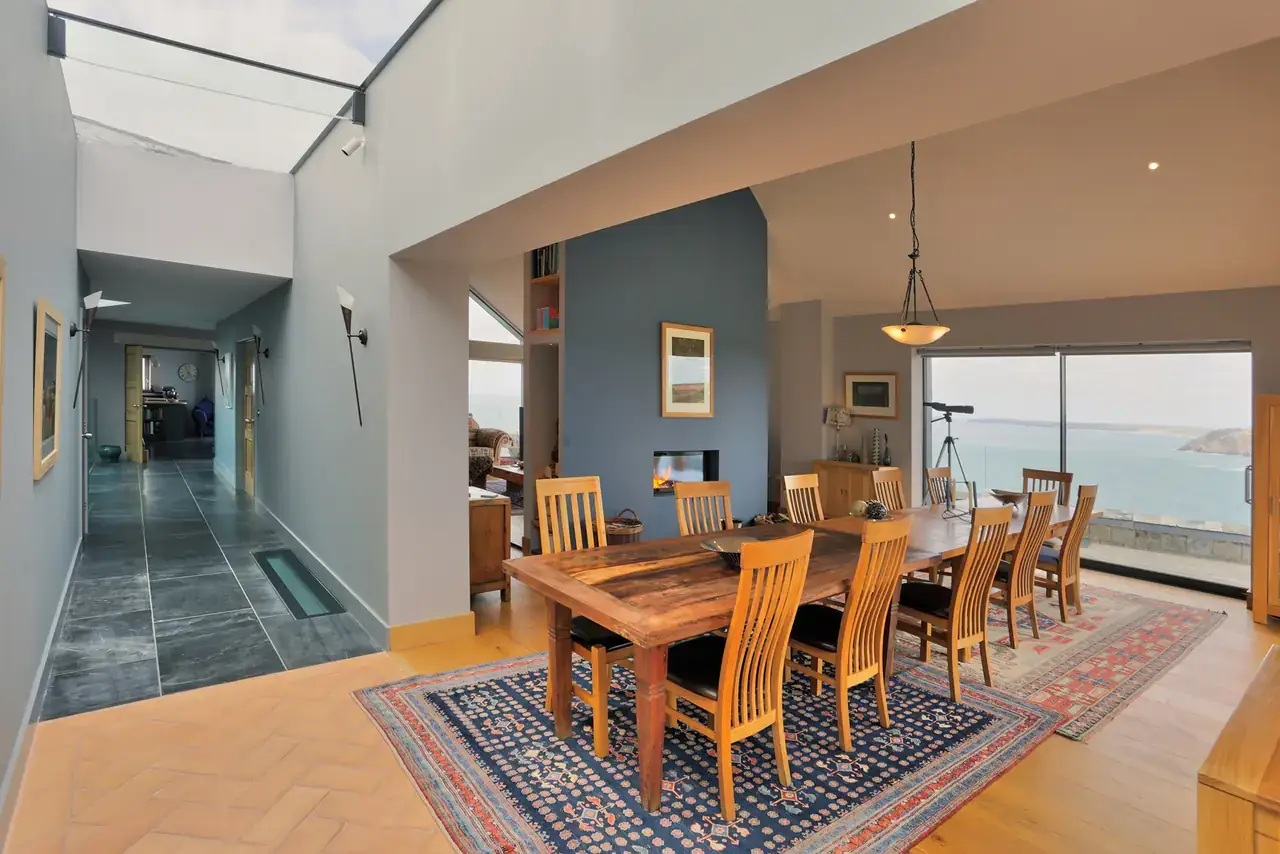
Sourcing materials abroad for a Dubai villa
Key points
- Buying stone, joinery, lighting and fittings abroad can give a one-off villa its character, but only if every choice is fixed in a signed sample or mock-up before anything is ordered.
- Plan backwards from the date each item is needed on site: production, transit, customs clearance and any conformity testing all come before installation.
- Most goods from outside the GCC pay 5% customs duty on their cost, insurance and freight value, and import VAT is then calculated on the value including that duty.
- Electrical and fire and life safety products may need UAE conformity certificates before they can be used, so check each item's status before it is bought, not when it lands.
- Decide early whether each item is supplied by you or by the contractor; owner-supplied items move risk, programme and warranty questions onto you.
Sourcing stone, joinery, lighting and fittings abroad is one of the best ways to make a one-off Dubai villa feel like nobody else's, and one of the easiest ways to lose months. It works when every choice is fixed in a signed sample or mock-up, each order is placed early enough to survive production, shipping, customs and any conformity checks, and someone checks what arrives against what was chosen. It goes wrong when beautiful things are bought on enthusiasm and the programme is left to catch up.
This article explains how to plan it, what UAE customs and conformity rules mean for the timing, and what to check when the crates arrive.
Why source materials abroad for a Dubai villa?
Dubai has a deep local supply market, and for many items a local supplier is the sensible choice: shorter lead times, local stock for replacements, and someone in the same city to call when something is wrong. Owners go abroad for the things that define the house. A particular quarry's marble, a joinery workshop whose detailing they have seen in person, a lighting maker, or ironmongery and sanitaryware that simply are not stocked locally.
That choice is worth making deliberately, item by item. A useful test is whether you would notice the difference standing in the finished room. If you would, it may be worth the extra lead time and risk. If you would not, buy locally and spend the time elsewhere.

What did we learn from sourcing trips with UK clients?
This is P Chapman Construction's UK experience. On the high-end houses our founder, Philip Chapman, built over 21 years, he regularly travelled with clients to choose stone, joinery and fittings, in the UK and abroad. Three lessons from those trips carry straight over to a Dubai villa.
Choose the actual material, not a catalogue name. Natural stone varies from block to block and from slab to slab. The same named marble can look quite different from one batch to the next. On the builder's side, we learned to ask for the slabs to be laid out together before they were cut, photographed, numbered and reserved, so the client was choosing the stone that would actually be fitted.
Sign the sample and keep it. Every agreed sample, whether a stone offcut, a timber and finish board, a door handle or a light fitting, was labelled, signed and dated by the client and kept as the reference. When a delivery arrived months later, it was checked against that sample, not against anyone's memory of a showroom.
Talk to the people who will make it. The most useful hour of many trips was spent in the workshop, not the showroom: how they pack for long journeys, what they need from site to make templates, and what they consider an acceptable variation. Those answers belong in the order, in writing.
How do samples and mock-ups protect the owner?
Samples fix the material. Mock-ups fix how it goes together. For anything that will be repeated across the house, such as a stone floor, a run of joinery, a bathroom wall or a lighting scheme, ask for a mock-up before full production.
| Item | What to agree in a sample or mock-up |
|---|---|
| Natural stone | Slab selection, vein direction and matching, finish (polished, honed, brushed), edge details, sealant |
| Joinery | Timber species and finish, door and drawer construction, hinges and runners, how it fixes to walls in a humid climate |
| Lighting | Colour temperature, beam angle, dimming behaviour with the chosen control system, finish |
| Ironmongery and fittings | Finish and how it ages, operation, compatibility with the doors and sanitaryware it will fit |
Mock-ups are also where a contractor's and a supplier's assumptions meet. If the stone fixer, the joiner and the electrician all see the same mock-up, fewer things are argued about later. Agree in the contract who builds it, where, and who pays if it has to be rebuilt.
How should lead times be planned?
Plan backwards from the date each item must be on site, not forwards from the date you fall in love with it. For each imported package, the programme needs room for:
- Final design and sample sign-off, including any shop drawings the supplier prepares.
- Production, which for bespoke joinery or stone can be the longest stage.
- Packing and delivery to the port or airport.
- Sea or air transit.
- Customs clearance in the UAE, and any conformity documents that must be in place.
- Delivery to site, storage, and acclimatisation where the material needs it.
- Installation by the contractor or the supplier's fitters.
Ask each supplier for their lead time in writing, ask what it assumes, and add your own allowance for the stages they do not control. In our experience, the dates that slip are rarely production dates. They are the decisions that come before production, and the paperwork that comes after it.
Tie these dates to the contractor's programme. If a stone floor arrives after the date the contractor needs it, the contractor may have a claim for delay. We cover the overall timeline in how long it takes to build a villa in Dubai.

Who should buy the materials: you or the contractor?
This is the decision that matters most commercially, and it should be made before the building contract is signed.
Contractor-supplied. The item sits inside the contract, often as a prime cost sum that is adjusted once the item is chosen. The contractor orders it, carries the delivery and quality risk, and adds the agreed mark-up. You keep the choice; the contractor keeps the risk.
Owner-supplied. You buy direct, often at a better price, and the contractor fixes it. From the builder's side, we always priced owner-supplied items carefully: unloading, storage, protection, fixing, and the time lost if the item arrived late, damaged or wrong. Any of those can become a variation or a delay claim. The contractor will also usually give no warranty on a product they did not supply.
Neither route is wrong. What causes disputes is leaving it unclear. For each imported package, the contract should say who buys it, who receives and checks it, who stores it, who carries the risk of damage, and what happens to the programme if it is late.
How do shipping terms affect who pays and who is responsible?
International sales normally use the ICC Incoterms rules, which set where the seller's responsibility ends and the buyer's begins. Under EXW (Ex Works), the buyer collects from the seller's premises and must complete any import formalities; the ICC suggests considering FCA instead where possible. Under DDP (Delivered Duty Paid), the seller must handle import formalities, and the ICC notes that some countries restrict foreign entities from doing so and recommends DAP instead of DDP where possible (ICC Academy).
For an owner, the practical points are simple. Know which term applies, know who arranges insurance for the journey, and appoint a licensed freight forwarder and clearing agent in Dubai before the goods leave the factory, not after they reach the port.
What UAE customs duty and VAT apply to imported materials?
The UAE is part of the GCC customs union, which applies a common duty of 5% on goods imported from outside the union, with listed exemptions and higher rates for some goods (Federal Authority for Identity, Citizenship, Customs and Port Security). Duty is generally charged on the cost, insurance and freight (CIF) value of the import (PwC Worldwide Tax Summaries).
The standard UAE VAT rate is 5% (PwC Worldwide Tax Summaries). The Federal Tax Authority's import guide says import VAT is calculated on the value of the goods including any customs duty and excise tax due, and that importers not registered for VAT must pay the applicable taxes before the goods are cleared (Federal Tax Authority).
Classification matters. Dubai applies the 2022 edition of the GCC Unified Customs Tariff, based on the World Customs Organization's Harmonized System (Dubai Customs). Ask your clearing agent to confirm the tariff code and duty for each item before you place the order, and build both duty and VAT into the budget.
Paperwork is the other half. Dubai Customs requires customs declarations and their required documents to be submitted within 30 days of completing the declaration, with a late fee of AED 5 a day up to AED 300, and records kept for five years (Dubai Customs). In practice, delays at clearance usually come from documents that do not match: an invoice, packing list and transport document that describe the same crate differently. Ask the supplier to send drafts for checking before shipment.
Do imported products need UAE conformity approval?
Some do, and this is where an imported item can sit in a warehouse while the programme moves on without it.
- Regulated products. The Ministry of Industry and Advanced Technology issues UAE Certificates of Conformity for products subject to technical regulations, supported by a test report from an accredited laboratory (MoIAT). Electrical items, including lighting, should be checked against the regulated products list before you buy.
- Fire and life safety products. Products such as fire detection and suppression equipment and emergency lighting need a UAE Civil Defence Certificate of Conformity issued through an approved body (BSI).
- Construction materials testing. Dubai Central Laboratory, part of Dubai Municipality, tests cement and other construction materials for consultants and contractors in Dubai (Dubai Media Office). Your registered consultant will confirm whether any imported material needs testing before use.
None of this is a reason not to import. It is a reason to ask every supplier, before you order, for the test reports and certificates they already hold, and to have your registered consultant confirm what applies. The same questions apply whether your villa is in Dubai or Abu Dhabi.
What should you check when imported materials arrive?
Arrival is the last chance to reject something cheaply. Once stone is cut and fixed, or joinery is installed, every problem becomes a negotiation. Check each delivery before the delivery note is signed:
- Against the order: quantities, sizes, finishes and product codes match the order and the packing list.
- Against the signed sample: colour, veining, finish and texture match the reference you kept.
- Condition: crates opened and inspected for breakage, chips, water damage and warping, with photographs taken before anything is moved.
- Documents: certificates of conformity, test reports, warranties, care instructions and spare parts are handed over with the goods.
- Storage: the material is stored where the supplier says it should be, protected from sun, heat, humidity and other trades.
Record any shortfall or damage in writing on the day, with photographs, and notify the supplier and the insurer straight away. We cover the final checks in our villa snagging checklist.
Where do sourcing budgets usually leak?
In our experience from the builder's side, the leaks are predictable: allowances in the contract set below the quality the owner actually chooses; duty, VAT, freight and clearing left out of the comparison with a local supplier; spares and extra stone for future repairs never ordered; and the contractor's handling and fixing of owner-supplied items priced late, as a variation. A sourcing schedule that lists every imported item, its landed cost and its required-on-site date closes most of these gaps. It sits naturally alongside the cost report described in villa construction cost in Dubai.
How Eastbridge can help
Sourcing is part of our full service for one-off villas. We travel with you to choose stone, joinery, lighting and fittings, record every sample and decision, build the sourcing schedule into the programme and the cost report, and check what arrives against what you chose. We take no commission, referral fee or discount from any supplier; you pay suppliers direct, and travel is charged at cost. We cover every community in Dubai and Abu Dhabi. See materials and specialist sourcing, owner's representation, our fees, or contact us to talk it through.

Questions
How much customs duty will I pay on materials imported into Dubai?
Should I buy materials myself or let the contractor buy them?
Do imported light fittings need approval in the UAE?
Do you take commissions from the suppliers you introduce?
Can you come with me on a sourcing trip?
Sources
- Federal Authority for Identity, Citizenship, Customs and Port Security: the GCC customs union
- PwC Worldwide Tax Summaries: United Arab Emirates, other taxes (customs duty and VAT)
- Federal Tax Authority: VAT import declaration user guide
- Dubai Customs: Customs Notice 01/2022, 2022 edition of the GCC Unified Customs Tariff
- Dubai Customs: Customs Notice 04/2023, submission of customs declarations and required documents
- Ministry of Industry and Advanced Technology: conformity certificates for regulated products (ECAS)
- Dubai Media Office: Dubai Central Laboratory testing of construction materials
- BSI: UAE Civil Defence Certificate of Conformity
- ICC Academy: Incoterms 2020, EXW or DDP
This article is general information, not advice for your specific project. Figures are from the sources cited and change over time.